

- USD-JPY 157.894 (+0.1 )
- GBP-USD 1.3367 (+0.31 )
- AUD-USD 0.70322 (-0.3 )
- USD-CAD 1.39797 (-0.09 )
- USD-CHF 0.82612 (-0.19 )
- NZD-USD 0.56281 (+0.1 )
Also increases risk of margin call
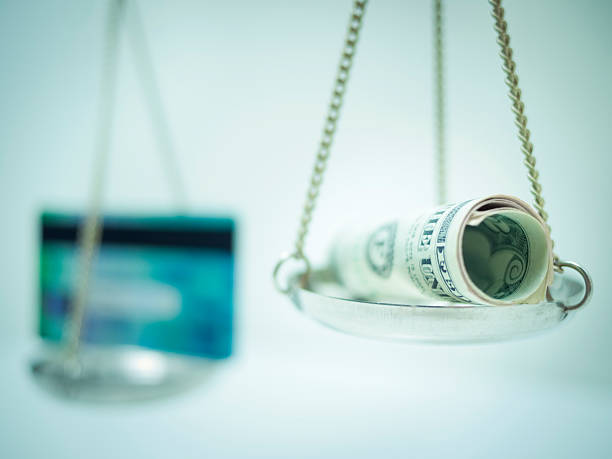
In the world of forex trading, leverage is often sold as a tool for multiplying profits. A trader with a small account can control a position worth tens or even hundreds of thousands of dollars, capturing gains that would otherwise be impossible. But leverage does not work in one direction only. While it amplifies winning trades, it also magnifies losses. And more critically, it increases the risk of a margin call. Understanding this relationship is essential for any trader who wants to survive long-term in the foreign exchange markets, especially on a platform like ForexTrades.net where the goal is safe, informed participation.
To grasp why leverage raises margin call risk, you must first understand how margin works. Margin is not a fee or a cost. It is a good-faith deposit that your broker holds to ensure you can cover potential losses. When you open a leveraged position, the broker locks a percentage of your account balance as required margin. For example, if you trade with 50:1 leverage, you only need to put up 2% of the notional position value as margin. That sounds efficient, but it also means that a relatively small move against your trade can wipe out that deposit.
The danger lies in the concept of used margin versus free margin. Your free margin is the balance of your account that is available to open new trades or to absorb losses. When you have open positions, the broker continuously calculates your equity, which is your account balance plus or minus any unrealized profits or losses. If the market moves against you, your equity falls. When equity drops below the required margin, the broker issues a margin call. This is not a gentle warning. It is a demand that you deposit more funds immediately or risk having your positions closed at a loss. Leverage accelerates the path to this point because it allows you to control a large position with a small amount of capital. A 100-pip adverse move on a standard lot using 50:1 leverage might cost you $1,000, which could represent a significant percentage of your account.
Many casual traders overlook the compounding effect of leverage on margin requirements during volatile periods. If you have multiple open positions, each one consumes margin. As the market swings, the combined margin requirement stays the same or even increases if the broker adjusts requirements based on volatility. But your equity fluctuates wildly. If you are using high leverage, you have very little buffer between your current equity and the margin call threshold. It does not take a dramatic market collapse to trigger a margin call. A few consecutive losing trades on a highly leveraged account can erase the free margin entirely. This is why experienced traders on ForexTrades.net often advise keeping leverage low even if the broker offers high ratios. The temptation to maximize leverage for quick gains is real, but the math works against you in any extended losing streak.
Another factor that increases margin call risk is the way brokers handle margin during news events or non-trading hours. Some brokers change their margin requirements ahead of major economic releases, effectively reducing your available leverage. If you are already fully leveraged, a sudden increase in margin requirement can trigger a margin call even if the market has not moved at all. This is a hidden risk that new traders rarely anticipate. The broker is protecting itself, but the cost falls on you. To avoid this, you must monitor not just your positions but also your broker’s margin policies and any scheduled changes.
The psychological dimension is just as important. When you trade with high leverage, the psychological pressure is intense. A small adverse move feels catastrophic because it consumes a large percentage of your account. This often leads to poor decision-making, such as holding onto losing positions too long or closing winners too early. Both behaviors erode your equity further, bringing you closer to a margin call. The irony is that traders who use excessive leverage often blow out their accounts not because the market was unusually bad, but because they had no room for normal fluctuations. In forex, even a modest retracement of 1% to 2% is routine. With 50:1 leverage, a 2% move against you can wipe out your entire account. That is not theory. That is the arithmetic of margin.
Safe trading on ForexTrades.net means understanding that leverage is a double-edged sword. It is not inherently evil, but it must be managed with discipline. The best way to reduce margin call risk is to use significantly less leverage than your broker offers. A realistic approach is to cap your position size so that a single losing trade does not exceed 1% to 2% of your account equity. This ensures that even a series of losses leaves you with enough free margin to survive. You should also regularly monitor your used margin ratio and avoid opening new positions when your free margin is already thin. Finally, always keep extra funds in your account as a cushion. A margin call should be rare, not a recurring event.
Leverage gives you power, but power without control leads to destruction. In forex trading, that destruction comes in the form of a margin call that closes your positions at the worst possible moment. If you want to make money safely, treat leverage with respect. Use it to enhance your strategy, not to gamble on direction. The market will test you. Make sure you have the margin to survive.




Currency Quotes
EUR-USD


Current
1.11692Change
+0.15
USD-JPY

Current
157.894Change
+0.1
GBP-USD

Current
1.3367Change
+0.31
AUD-USD

Current
0.70322Change
-0.3
USD-CAD

Current
1.39797Change
-0.09
USD-CHF

Current
0.82612Change
-0.19
NZD-USD

Current
0.56281Change
+0.1