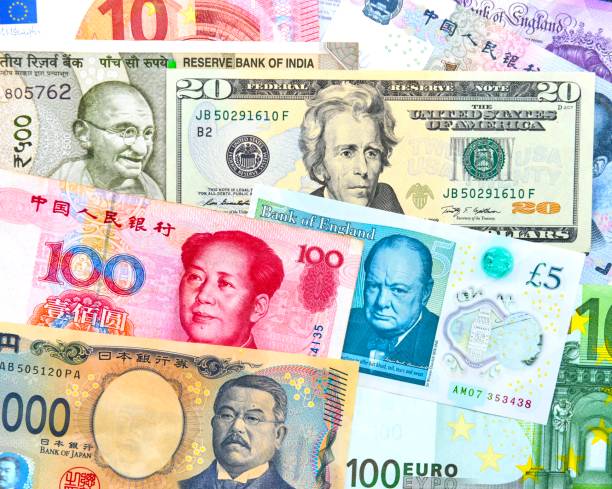

- USD-JPY 157.894 (+0.1 )
- GBP-USD 1.3367 (+0.31 )
- AUD-USD 0.70322 (-0.3 )
- USD-CAD 1.39797 (-0.09 )
- USD-CHF 0.82612 (-0.19 )
- NZD-USD 0.56281 (+0.1 )
Drawdown: measuring account decline

In the high-stakes arena of forex trading, no metric is more brutally honest than drawdown. While aspirational traders obsess over profit percentages and winning streaks, seasoned professionals understand that drawdown is the true measure of a strategy’s resilience—and a trader’s psychological fortitude. Drawdown, simply put, is the peak-to-trough decline in your trading account’s equity over a specific period, expressed as a percentage. But reducing it to a mere number would be a mistake. In the context of the foreign exchange markets, drawdown functions as both an objective performance indicator and a relentless reality check. Understanding its nuances is not optional; it is essential for anyone who aims to survive long enough to profit from currency fluctuations.
At its core, drawdown captures the distance between your account’s highest value and its lowest point before a new peak is established. For example, if your account reaches $10,000 and subsequently falls to $8,000, you are experiencing a 20% drawdown. This percentage is not an abstract figure—it directly dictates the recovery burden. A 20% loss requires a 25% gain just to break even, while a 50% drawdown demands a 100% return to restore the original capital. This geometric asymmetry is why drawdown is far more dangerous than a simple loss. It reveals the compounding damage that unchecked risk can inflict. In forex, where leverage multiplies both gains and losses, drawdown can accelerate into a death spiral faster than in any other financial market. A trader using 50:1 leverage does not need a large adverse move to see their equity plummet; a modest 2% currency shift can erase the entire account if position sizing is reckless.
The forex market’s liquidity and 24-hour nature introduce unique drawdown dynamics. Unlike stock markets with fixed trading hours, currency pairs move continuously across global sessions. This means a drawdown can deepen overnight while you sleep, triggered by unexpected central bank announcements or geopolitical shocks. A Japanese yen carry trade unwinding can shave 15% off your account before you wake up. The lack of circuit breakers or daily price limits in the spot forex market amplifies this risk. Professional traders do not merely track their maximum drawdown retrospectively; they monitor it in real time, often using trailing equity curves to set hard stops. Accepting a 30% drawdown on a strategy that historically delivers 40% annual returns might seem rational, but if that drawdown occurs during the first two months of trading, the psychological pressure can destroy discipline and lead to abandonment of a fundamentally sound approach.
Drawdown must also be contextualized within your trading system’s expected performance. Every strategy, whether trend-following, mean-reversion, or breakout-based, has an inherent equity curve volatility. A scalping system might produce tiny, frequent drawdowns while a swing trading approach could endure prolonged periods of underperformance. The critical concept here is the “maximum adverse excursion,” a metric that measures how far a trade moves against you before turning profitable. By analyzing historical drawdowns, you can distinguish between normal statistical variance and the early signs of a strategy’s failure. A drawdown that exceeds two standard deviations from your average equity decline suggests that market conditions have structurally changed. In such cases, blindly continuing to trade the same system is not perseverance—it is suicide.
Risk management directly determines your account’s drawdown ceiling. Position sizing based on a fixed percentage of equity—typically 1% to 2% per trade—is the most reliable method to contain losses. However, even this approach has a flaw: it ignores the correlation between consecutive losses. A 2% risk per trade sounds conservative, but a string of ten losing trades in a row would result in an 18% drawdown. Monte Carlo simulations are far more honest than backtests. They run thousands of randomized sequences of your trade results to reveal the worst-case drawdown your system could realistically face. If that worst-case exceeds your psychological threshold—generally 20% to 30% for most retail traders—you must either reduce risk or accept that you are playing with emotional dynamite.
Beyond quantitative analysis, drawdown has a corrosive psychological component that is rarely discussed in educational material. Watching your equity shrink day after day triggers a primal fight-or-flight response. The urge to “double down” to recover losses quickly is the most common path to blowing up an account. Conversely, the fear of further drawdown leads traders to exit winning positions prematurely, capping their upside and extending the recovery period. This is known as “drawdown paralysis,” and it is why many successful traders step away from the screen entirely during severe equity declines. They understand that emotional decision-making turns a recoverable drawdown into a terminal crater.
Finally, drawdown is not inherently evil. Some of the most profitable forex strategies in history exhibit deep and regular drawdowns because they capture massive trend moves that require withstanding violent counter-swings. The key is alignment: your capital base, risk tolerance, and time horizon must match the drawdown profile of your chosen approach. If you trade a high-drawdown trend-following strategy with capital you cannot afford to lose 40% of, you are not trading—you are gambling. The most advanced forex traders do not ask how much they can make. They ask how much they can lose and still stay in the game. Drawdown is the answer. Measure it, respect it, and build your entire framework around surviving it.

Currency Quotes
EUR-USD


Current
1.11692Change
+0.15
USD-JPY

Current
157.894Change
+0.1
GBP-USD

Current
1.3367Change
+0.31
AUD-USD

Current
0.70322Change
-0.3
USD-CAD

Current
1.39797Change
-0.09
USD-CHF

Current
0.82612Change
-0.19
NZD-USD

Current
0.56281Change
+0.1