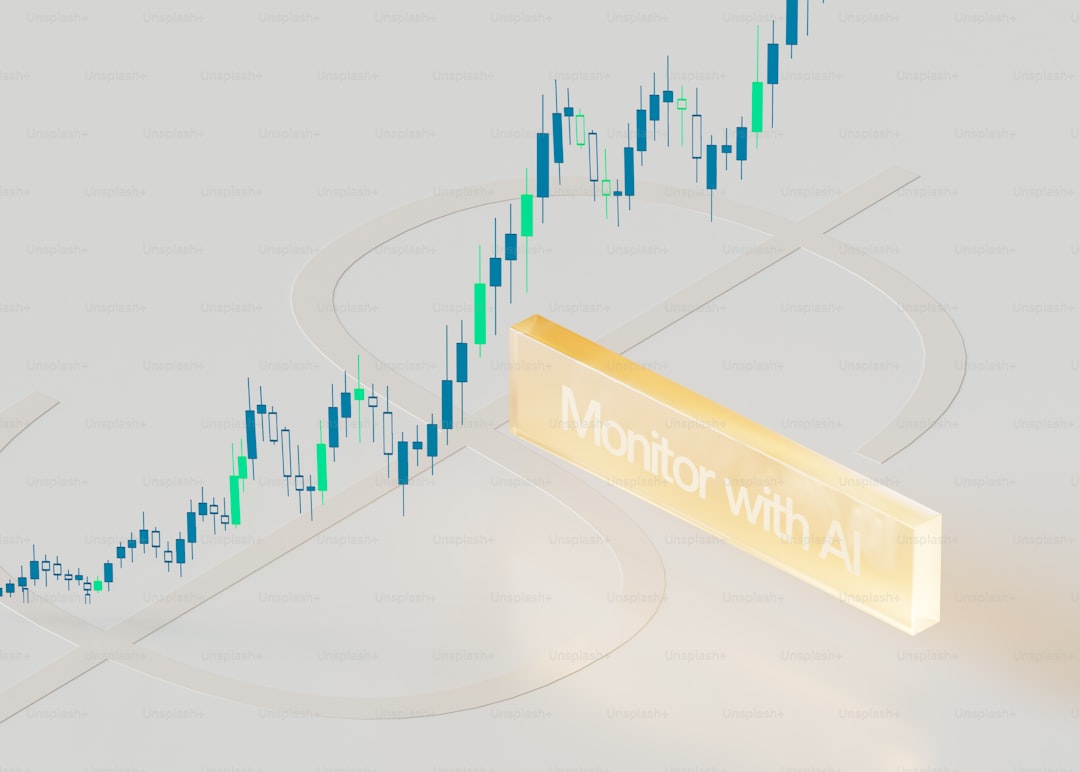

ECNs aggregate liquidity from multiple banks

The foreign exchange market operates on a layered structure that most retail traders never fully see. At the top, interbank dealing desks trade directly with one another. Below that, prime brokers extend credit and connectivity. At the next level down—what ForexTrades.net calls Tier 2—electronic communication networks, or ECNs, serve as the critical infrastructure that aggregates liquidity from multiple banks. Understanding this aggregation process is not optional academic trivia; it is essential knowledge for any trader who wants to understand where their order actually goes, why spreads tighten or widen, and how to avoid being picked off by smarter money.
ECNs emerged in the late 1990s as a technological response to a fundamental inefficiency. Before ECNs, a retail trader or small hedge fund could only get liquidity from one bank at a time. If you called a bank for a quote on EUR/USD, you received a two-way price, but you had no idea whether another bank down the street was offering a better spread or deeper volume. Large banks had no incentive to make their full books visible to smaller counterparties. The result was a fragmented, opaque market where the biggest players retained an information advantage.
An ECN solves this by acting as a neutral technological bridge. It connects to multiple liquidity providers simultaneously—typically between five and fifteen large global banks, plus non-bank market makers and sometimes other ECNs. Each of these providers streams live, two-way prices into the ECN’s matching engine. The ECN then aggregates all these streams into a single, consolidated order book. When a trader sends an order to the ECN, the network does not guess which bank to route it to. Instead, it matches that order against the best available price across all connected providers, automatically sweeping through the aggregated depth to fill as much volume as possible at the best price before moving to the next best.
This aggregation creates two powerful effects that directly impact traders. First, it compresses spreads. In a single-bank relationship, the spread reflects that bank’s internal risk appetite and its desire to earn a margin. With an ECN, if Bank A is quoting 1.1200–1.1202 and Bank B is quoting 1.1200–1.1201, the ECN will show 1.1200–1.1201. The trader effectively gets Bank B’s tighter offer, not Bank A’s. Over thousands of trades, those fractional pip improvements compound into significant savings. More importantly, the ECN’s aggregated book shows real depth—the actual volume available at each price level from every bank. A trader can see whether there is five million euros sitting at the top of the bid or only five hundred thousand. That transparency changes execution strategy entirely.
Second, aggregation reduces the impact of toxic flow. A single bank receiving a large sell order from a client knows that the client might have superior information or a better read on short-term direction. The bank may widen its spread or reject the trade. An ECN, by contrast, does not know who the counterparty is behind each order. It simply matches orders anonymously based on price and time priority. A large sell order hits the aggregated book and fills against the best available bids from whichever bank offered them. No single bank can choose to step back from the trade because the matching engine is agnostic. This anonymity protects traders from being gamed by dealers who suspect adverse selection.
However, there is a structural nuance that advanced traders must grasp. ECNs do not create liquidity; they reflect it. The depth visible in the aggregated book is only as good as the willingness of the connected banks to stream tight, honest prices. Banks are not charitable institutions. They stream prices to an ECN because they want order flow, but they also protect themselves. If a bank sees a pattern of orders that consistently picks off its bad side, it may widen its stream, withdraw certain pairs, or even disconnect. The ECN’s aggregate quality is therefore fragile. It depends on a balanced flow of uninformed and informed orders. When the market becomes volatile—for example during a non-farm payroll release—many banks pull their prices or widen them drastically. The ECN’s aggregated book thins out, and execution quality degrades. A trader relying solely on ECN aggregation during such moments may find fills slipping wildly.
The relationship between ECNs and prime brokers is symbiotic. While prime brokers provide the credit lines and settlement infrastructure, ECNs provide the connectivity and matching technology. A retail trader accessing the market through a retail broker actually gets routed through both layers. The retail broker maintains a prime brokerage relationship, which in turn connects to an ECN. The prime broker vets the trader’s credit and handles margin, while the ECN handles the actual execution and aggregation. This is why a retail trader on a broker that uses a true ECN model sees tighter spreads and fewer requotes than one on a broker that internalizes all flow.
For the casual or moderately active investor on ForexTrades.net, the takeaway is clear. An ECN is not just a fancy dashboard or a checkbox on a broker’s feature list. It is a market structure innovation that forces banks to compete openly for your order. When you trade on an ECN, you are not a supplicant asking one bank for a price. You are a consumer walking into a supermarket aisle where a dozen banks have posted their best offers, and the network instantly picks the cheapest one for you. That structural shift from bilateral negotiation to multilateral aggregation is what separates modern forex from the old club of telephone dealers.
The best traders use this knowledge to choose their brokers and their execution timing. They know that ECN aggregation works best in liquid, calm conditions. They also know that when volatility spikes, the aggregated book can evaporate, and they must plan for slippage. Mastery of the market is mastery of its structure. ECNs are at the heart of that structure, and understanding how they aggregate liquidity from multiple banks is a core part of Tier 2 knowledge.