
Exporters hedge against depreciation
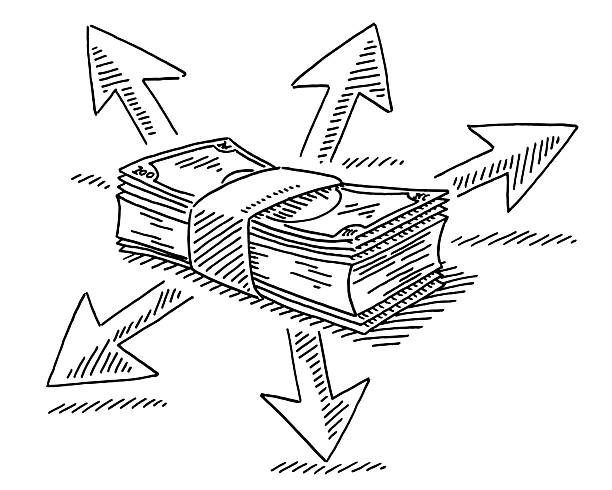
Exporters face a persistent financial risk: the depreciation of the domestic currency relative to the foreign currencies they receive in payment. When an exporter sells goods to a buyer in another country, the revenue is typically denominated in a foreign currency such as the U.S. dollar, euro, or yen. If the exporter’s home currency strengthens between the time the contract is signed and the payment is received, the exporter receives fewer domestic currency units per unit of foreign currency, effectively reducing profit margins or even causing a loss. To neutralize this risk, exporters utilize specialized foreign exchange transactions that lock in exchange rates or limit downside exposure. Understanding the types of forex transactions available for hedging is essential for any exporter who wants to protect cash flows and maintain predictable financial planning.
The most straightforward hedging instrument is the forward contract. A forward contract is a private, over-the-counter agreement between the exporter and a financial institution to exchange a specified amount of one currency for another at a predetermined rate on a future date. Unlike spot transactions, which settle in two business days, forward contracts have no standard maturity and can be tailored to the exact date the exporter expects to receive payment. This customization is critical because exporters often have irregular payment schedules. For example, an Indian exporter expecting a $500,000 payment in 90 days can enter a forward contract to sell those dollars for Indian rupees at a rate set today. If the rupee strengthens against the dollar during those 90 days, the forward contract protects the exporter from receiving fewer rupees. The key advantage is certainty: the exporter knows the exact domestic currency amount they will receive, eliminating exchange rate uncertainty entirely. However, forward contracts carry counterparty risk because they are not traded on a centralized exchange, and they require the exporter to fulfill the contract even if the spot rate moves favorably.
Another widely used instrument is the currency futures contract. Futures are standardized contracts traded on regulated exchanges such as the Chicago Mercantile Exchange. They operate similarly to forwards in that they lock in an exchange rate for future delivery, but their standardization in terms of contract size, settlement dates, and margin requirements makes them more liquid and transparent. Exporters who prefer exchange-traded instruments or who want to avoid the counterparty risk inherent in forward contracts often turn to futures. The downside is that futures are less flexible than forwards; an exporter with a contract size that does not match standard futures lots may face imperfect hedging. Additionally, futures require daily margin payments, meaning the exporter must post cash to cover potential losses marked to market each day. This can create liquidity pressure. Despite these limitations, futures are useful for exporters who need to hedge predictable, recurring cash flows and who value the security of a clearinghouse guarantee.
For exporters who are willing to pay a premium in exchange for flexibility, the currency option is a superior choice. A call option gives the holder the right, but not the obligation, to buy a currency at a specified strike price, while a put option gives the right to sell. An exporter expecting payment in a foreign currency would purchase a put option on that currency, allowing them to sell it at a guaranteed rate if the domestic currency strengthens. If the domestic currency weakens instead, the exporter can simply allow the option to expire and exchange the foreign currency at the more favorable spot rate. This asymmetric protection is the primary value of options: they cap the downside risk while leaving upside potential intact. The cost of this protection is the premium paid upfront, which can be significant, especially during periods of high volatility. Exporters with thin margins must weigh whether the premium justifies the protection. Nevertheless, for exporters facing large, uncertain payment amounts or who are exposed to currencies with high volatility, options provide a more strategic hedge than forwards or futures.
A less common but tactical approach is the use of swap transactions. Currency swaps involve the simultaneous purchase and sale of a currency for different value dates. An exporter might use a short-term swap to roll over a position or to manage temporary cash flow mismatches. For instance, if payment is expected in 60 days but the exporter needs domestic currency immediately, they could borrow foreign currency, swap it for domestic currency now, and then unwind the swap when payment arrives. Swaps are more complex and are typically used by larger exporters with dedicated treasury departments. For most casual or moderately active investors, swaps are not the primary hedging tool, but understanding their existence is useful because swap rates influence forward pricing and overall market dynamics.
The choice among forward contracts, futures, options, and swaps depends on the exporter’s specific risk tolerance, cash flow predictability, and cost sensitivity. A conservative exporter who prioritizes certainty above all else will likely prefer forward contracts. An exporter who wants protection without sacrificing potential gains should examine options. Those who require liquidity and transparency will gravitate toward futures. Ultimately, no single transaction type fits every scenario. Exporters should work with forex professionals to construct a hedging program that matches their unique exposure profile. By mastering these forex transaction types, exporters can confidently participate in international trade without fear of currency depreciation eroding their hard-earned revenue.