
GDP reports released quarterly
Every three months, the Bureau of Economic Analysis releases the Gross Domestic Product report, and currency traders around the world stop what they are doing. The GDP print is not just another economic statistic. It is the single most comprehensive measure of a country’s economic output, and for anyone trading currencies, it serves as a direct signal about where a currency is headed. Understanding how GDP growth influences exchange rates is not optional for serious forex traders. It is foundational. If you trade the majors, you need to know exactly why a stronger GDP report strengthens a currency and why a miss weakens it.
The logic is straightforward but often misunderstood. GDP measures the total value of goods and services produced within a country’s borders. When GDP grows faster than expected, it signals that the economy is expanding. Businesses are producing more, consumers are spending more, and corporate profits are rising. Higher economic growth typically leads to higher demand for that country’s currency. Foreign investors want to buy assets in that economy, whether stocks, bonds, or real estate, and to do so they must first buy the local currency. That increased demand pushes the exchange rate higher. Conversely, a GDP report that comes in below expectations signals economic weakness. Investors pull capital out, demand for the currency falls, and the exchange rate drops.
But the relationship is not as simple as good GDP equals strong currency. The market’s reaction depends heavily on expectations. If traders already priced in a 3% growth rate and the actual number comes in at 3.1%, the move might be muted. However, a 2.5% miss can trigger a sharp selloff because the surprise changes the outlook for monetary policy. This is where the real meat of the analysis lives. GDP reports do not exist in a vacuum. They directly influence central bank decisions, and central bank decisions are the primary drivers of medium-term exchange rate trends.
Consider the Federal Reserve. When U.S. GDP reports show sustained, above-trend growth, the Fed becomes more likely to raise interest rates or at least hold them steady rather than cut. Higher interest rates attract foreign capital seeking yield, which strengthens the dollar. A weak GDP report, on the other hand, pressures the Fed to cut rates or engage in quantitative easing. Lower rates make the dollar less attractive. This chain from GDP to interest rate expectations to capital flows is the core mechanism that connects economic health to exchange rates. Traders who ignore this sequence are guessing, not trading.
Another layer is the composition of GDP itself. A report driven by strong consumer spending is different from one driven by government spending or inventories. Consumer spending accounts for roughly two-thirds of U.S. GDP and is more sustainable than a temporary inventory buildup. If a GDP beat comes from inventory accumulation, the market may dismiss it as a one-off and the currency might not rally. If the beat comes from robust business investment and consumer spending, the currency response is usually more durable. Advanced traders break down the subcomponents of the GDP release before placing a trade.
The timing of the report also matters. The advance GDP estimate is released about four weeks after the end of the quarter. That is often the most market-moving release because it is the first hard data point. The second and third estimates follow with revisions, but by then the market has already adjusted. Experienced forex traders watch the advance release closely and are prepared to act within seconds. The volatility around GDP releases can be extreme, especially if the number deviates significantly from consensus. You can see the dollar index move thirty to fifty pips in a matter of minutes.
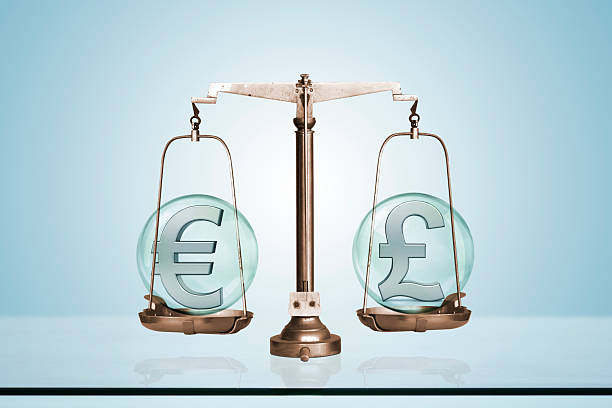
There is also a comparative element. Currency trading is about relative economic performance. A strong GDP report in the United States means less if the Eurozone just printed an even stronger number. The dollar does not trade in a bubble. It trades against other currencies. So the market compares the GDP growth rates, inflation trends, and interest rate trajectories of the two economies in a currency pair. For EUR/USD, you are effectively betting on the relative health of the U.S. economy versus the euro area. A U.S. GDP beat paired with a disappointing Eurozone GDP report is a much stronger bullish signal for the dollar than a U.S. beat that is matched by similar strength abroad.
Finally, know that GDP reports have a lagging quality. They tell you what happened three months ago. Smart traders use GDP to confirm trends that are already visible in high-frequency data like employment, retail sales, and industrial production. If these leading indicators have been accelerating, a strong GDP report validates the trend and reinforces the currency move. If they have been weakening, a strong GDP print might be a head fake. Do not trade the number alone. Trade the story that the number completes.
GDP reports are not just headlines. They are the pulse of an economy and a direct line into the thinking of central bankers. For any trader serious about understanding exchange rates, learning to read GDP reports in context is not optional. It is the difference between trading by hunch and trading with conviction.