

- USD-JPY 157.894 (+0.1 )
- GBP-USD 1.3367 (+0.31 )
- AUD-USD 0.70322 (-0.3 )
- USD-CAD 1.39797 (-0.09 )
- USD-CHF 0.82612 (-0.19 )
- NZD-USD 0.56281 (+0.1 )
High leverage does not mean high safety
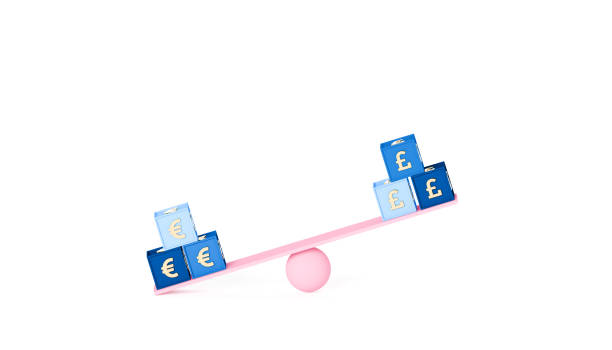
Leverage is one of the most alluring features of forex trading. The ability to control a large position with a relatively small deposit—often 50:1, 100:1, or even higher—can make even modest price movements seem like windfalls. Many newcomers to the foreign exchange market equate high leverage with high potential, and by extension, high safety. This is a dangerous myth. Leverage is not a shield. It is a magnifier, and what it magnifies first is risk. To trade currencies safely, as ForexTrades.net advocates, you must understand that leverage amplifies losses just as efficiently as it amplifies gains, and safety comes from position sizing, risk management, and a sober understanding of margin, not from a high ratio.
The confusion stems from how leverage is often marketed. Brokers advertise high leverage as a gateway to bigger returns with less capital. For a casual or moderately active investor, this sounds like an efficient use of funds. Why tie up $10,000 when you can control the same position with $200? The reality is that leverage does not reduce your exposure to the market; it increases your sensitivity to price changes. If you open a standard lot position (100,000 units of currency) with 100:1 leverage, your required margin is only $1,000, but the full value of the trade is still $100,000. A single 1% move against you results in a $1,000 loss—the entirety of your margin. Your account is effectively wiped out, not because the market moved dramatically, but because your leverage turned a small percentage shift into a total loss. High leverage thus transforms ordinary market noise into a potential death sentence for your account.
Safety in forex does not come from a high leverage ratio. It comes from proper risk per trade. Professional traders rarely use leverage to its maximum. They calculate position size based on a fixed percentage of their account value, often risking no more than 1% to 2% per trade. If you have a $10,000 account and risk 2% per trade, your maximum loss is $200. With high leverage, you could easily risk $200 on a tiny price move that would otherwise be irrelevant. Without leverage, that same $200 loss might require a 2% move against a $10,000 position. The difference is not in your favor when leverage is high; it just means you get stopped out faster and more frequently. Leverage does not make a bad trade good, it just makes it quick.
Another misconception is that high leverage provides a cushion against volatility. Some traders believe that if they use high leverage, they can close a trade quickly at a small profit and avoid larger drawdowns. This is a flawed logic. The same price spike that would give you a small profit can just as easily give you a small loss, and because your margin is thin, you have less room to wait for a reversal. High leverage forces you to be precisely right about direction and timing. It eliminates the grace period that a well-capitalized account provides. Market makers and institutional traders use little to no leverage compared to retail speculators, precisely because they understand that capital preservation is the foundation of long-term profitability. They let the market come to them, rather than forcing trades into tight margins.
The safest approach for a casual or moderately active investor is to treat leverage not as a feature, but as a constraint. Choose a leverage ratio that allows you to survive a series of losing trades without a margin call. For many, that means 10:1 or 20:1 at most. This gives you enough firepower to trade effectively while leaving room for error. A 50:1 account with proper risk management can be safe, but only if you use it to control smaller lot sizes than the maximum allowed. The key is to never treat the maximum available leverage as a target. Treat it as a ceiling you will not touch.
You also need to understand margin calls. A margin call occurs when your account equity falls below the required margin for your open positions. With high leverage, the buffer between your entry price and the margin call level is razor thin. A string of small losing trades can trigger a forced liquidation, locking in losses that might have been temporary if you had more breathing room. This is another way high leverage destroys safety: it removes your control over when to exit. Instead of making a strategic decision based on market analysis, you are forced out by a mechanical margin requirement. That is not trading; it is gambling with a timer.
Finally, high leverage often masks poor strategy. If you enter a trade with 100:1 leverage and make a quick 10-pip profit, you might feel like a skilled trader. In reality, you took a massive risk for a small reward relative to your total exposure. Over many trades, the math works against you. The small losses from slippage, spreads, and commission on large positions will eat into your capital faster than the occasional wins can replenish. Safety in forex is about consistency, not occasional heroics. It is about surviving the inevitable losing streaks and staying in the game long enough to benefit from high-probability setups.
In conclusion, high leverage is a tool, not a guarantee of safety. It does not protect you from losses; it accelerates them. For the casual or moderately active investor seeking to trade currencies safely on ForexTrades.net, the right mindset is to use leverage conservatively, prioritize capital preservation, and never mistake a high ratio for a low-risk approach. The market rewards patience and discipline, not recklessness with borrowed buying power.
Currency Quotes
EUR-USD


Current
1.11692Change
+0.15
USD-JPY

Current
157.894Change
+0.1
GBP-USD

Current
1.3367Change
+0.31
AUD-USD

Current
0.70322Change
-0.3
USD-CAD

Current
1.39797Change
-0.09
USD-CHF

Current
0.82612Change
-0.19
NZD-USD

Current
0.56281Change
+0.1