

- USD-JPY 157.894 (+0.1 )
- GBP-USD 1.3367 (+0.31 )
- AUD-USD 0.70322 (-0.3 )
- USD-CAD 1.39797 (-0.09 )
- USD-CHF 0.82612 (-0.19 )
- NZD-USD 0.56281 (+0.1 )
High-risk strategy even for experienced traders
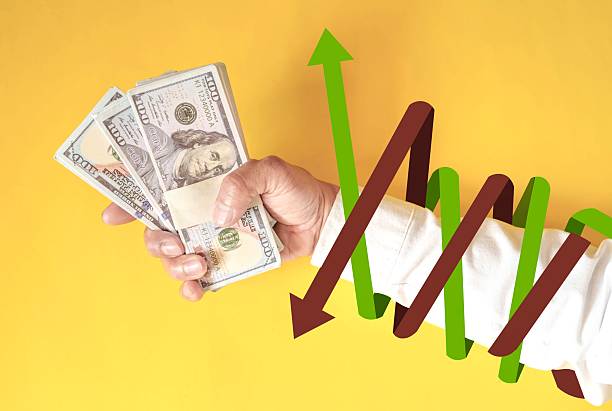
In the world of foreign exchange, the majority of traders adhere to trend-following strategies, buying into strength and selling into weakness. But a smaller, more aggressive subset of participants engages in counter-trend trading, an approach that seeks to profit by trading against the prevailing market direction. While this strategy can yield spectacular returns in the right hands, it carries a level of risk that makes it dangerous even for seasoned professionals. Understanding the mechanics, the psychological demands, and the specific conditions that make counter-trend trading viable is essential before attempting to deploy it in live markets.
Counter-trend trading is not simply buying a falling market or selling a rising one out of stubbornness. It is a disciplined method based on identifying points of exhaustion in a trend, often at key support or resistance levels, overbought or oversold conditions on oscillators like the Relative Strength Index, or after a series of impulsive price moves that suggest the trend is losing momentum. The core assumption is that all trends, no matter how powerful, eventually pause or reverse. The counter-trend trader aims to capture the early stage of that reversal, a swing move that can be substantial but is inherently unpredictable in timing and magnitude.
The primary source of risk in counter-trend trading is the asymmetry of failure. When a trader attempts to catch a falling knife by buying into a downtrend, the potential for a continued drop is unlimited. Trends, especially in forex, can persist far longer than fundamental or technical analysis would suggest, driven by momentum, central bank policy shifts, or large institutional flows. A trader who enters a counter-trend position too early or without a tight stop-loss can suffer catastrophic losses as the trend accelerates against them. This is the opposite of trend-following, where a trader can let profits run and cut losses short; in counter-trend trading, the profit target is often modest, while the loss can be devastating if the trend does not reverse.
Experienced traders are not immune to these dangers. In fact, overconfidence in one’s ability to spot a top or bottom is a common pitfall. A veteran trader may have successfully predicted ten reversals in a row, only to be wiped out on the eleventh when a trend becomes parabolic. The psychology of counter-trend trading is particularly taxing because it requires going against the crowd. It feels unnatural to sell when everyone else is buying, and it requires immense discipline to exit quickly if the trade fails. This cognitive dissonance often leads traders to hold onto losing positions, hoping for a turn that may never come, converting a calculated counter-trend trade into a catastrophic trend-following loss.
Another critical factor is the selection of timeframes. Counter-trend strategies work best on shorter timeframes, such as the 15-minute or one-hour charts, where mean reversion is more common and trends are shorter-lived. On daily or weekly charts, major trends are less likely to reverse abruptly, and the risk of staying in a losing position overnight increases significantly. Even on shorter timeframes, the trader must have a clear exit strategy. This often involves using a stop-loss placed just beyond the swing high or low that triggered the entry, combined with a profit target based on recent volatility or a prior support or resistance zone. Without these parameters, the trader is essentially gambling on a turn with no edge.
Finally, it is important to recognize that counter-trend trading requires a distinct skill set that goes beyond standard trend analysis. The trader needs to understand market structure, order flow, and the difference between a correction and a reversal. A mere pullback in a strong trend is not a counter-trend opportunity; it is a trap that lures in the unwary. Successful counter-trend traders use tools like Fibonacci retracements, divergence on momentum indicators, and volume profiles to confirm that the move is nearing its end. They also accept that a significant percentage of their trades will be losers. The goal is not to win every trade but to have a positive risk-reward ratio that favors them when the reversal occurs.
For the readers of ForexTrades.net, the takeaway should be clear. Counter-trend trading is not a beginner’s strategy, nor is it a safe path to consistent profits for the casual investor. Even experienced traders should approach it with caution, limiting position size, always using hard stops, and never forcing a trade when the market shows no clear exhaustion signals. The foreign exchange markets are efficient, and trends will often run further than you expect. If you choose to trade against them, do so with full knowledge that you are accepting a higher degree of risk in exchange for the possibility of a fast, and perhaps fleeting, reward. In this game, humility and discipline are the only edges that matter.






Currency Quotes
EUR-USD


Current
1.11692Change
+0.15
USD-JPY

Current
157.894Change
+0.1
GBP-USD

Current
1.3367Change
+0.31
AUD-USD

Current
0.70322Change
-0.3
USD-CAD

Current
1.39797Change
-0.09
USD-CHF

Current
0.82612Change
-0.19
NZD-USD

Current
0.56281Change
+0.1