
How China's surplus impacts global markets
For traders navigating the foreign exchange markets, understanding the mechanics behind trade balances is not optional—it is foundational to predicting currency movements. Among the most potent and persistent forces shaping global currency valuations is China’s massive trade surplus. As the world’s largest exporter and a manufacturing powerhouse, China’s surplus is not a static statistic; it is a dynamic lever that reverberates through exchange rates, capital flows, and the monetary policies of every major economy. This essay focuses on how China’s trade surplus influences global exchange rates, specifically within the context of trade balances and current account deficits, offering advanced insight for those looking to trade currencies with a strategic edge.
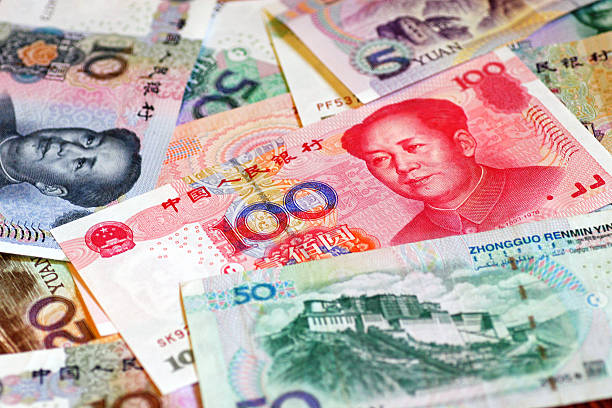
At its core, a trade surplus means a country exports more than it imports. For China, this surplus has been consistently enormous, often exceeding hundreds of billions of dollars annually. The immediate effect on exchange rates is rooted in the basic supply-and-demand dynamics of currencies. When Chinese exporters sell goods to foreign buyers, those buyers must convert their domestic currency—whether U.S. dollars, euros, or yen—into renminbi to pay Chinese suppliers. This increased demand for renminbi pushes its value upward relative to other currencies. Conversely, because China imports relatively less, the outflow of renminbi to purchase foreign goods is smaller, creating a structural imbalance. The result, under a free-floating system, would be a persistently strengthening renminbi. However, this is where the story becomes more complex and crucial for forex traders.
China operates a managed float exchange rate regime, not a fully free-floating one. For years, the People’s Bank of China has actively intervened to prevent the renminbi from appreciating too quickly, which would harm the competitiveness of Chinese exports. This intervention involves selling renminbi and buying foreign assets—primarily U.S. Treasury bonds—to artificially increase the supply of renminbi and dampen its value. This accumulation of foreign reserves, which exceeds $3 trillion, is a direct consequence of the trade surplus. For forex traders, the key takeaway is that China’s surplus does not automatically lead to a stronger renminbi in the short term; instead, it creates a persistent intervention pressure that depresses the currency relative to its fundamental value. This divergence between the renminbi’s theoretical and actual price is a source of trading opportunities, particularly in pairs like USD/CNY or EUR/CNY.
The surplus also shapes global markets through its effect on the current account deficits of China’s major trading partners, particularly the United States. The U.S. runs a large current account deficit because it imports far more from China than it exports. To finance this deficit, the U.S. must attract foreign capital from surplus countries like China. This capital flows back into U.S. assets—bonds, stocks, and real estate—keeping U.S. interest rates lower than they would otherwise be. Lower interest rates weaken the U.S. dollar over time, as investors seek higher yields elsewhere. Thus, China’s surplus indirectly pressures the dollar downward, even as it sustains the renminbi’s artificial suppression. This interconnectedness means that when China’s surplus shrinks or grows, it sends ripples through the entire forex landscape. For instance, a reduction in China’s surplus, perhaps due to slowing exports or rising domestic consumption, would reduce the need for U.S. capital inflows. This could lead to higher U.S. bond yields, a stronger dollar, and a cascade of adjustments across emerging market currencies.
Another critical factor is the role of China’s surplus in global commodity prices. Since China is the world’s largest consumer of raw materials—oil, copper, iron ore, and soybeans—its surplus often funds large-scale infrastructure projects and industrial output. When China’s economy is booming and its surplus is robust, demand for commodities rises, pushing up prices. This benefits commodity-exporting nations like Australia, Canada, and Brazil, strengthening their currencies. Conversely, when China’s surplus tightens due to slower growth or trade tensions, commodity prices fall, weakening those currencies. The Australian dollar and the New Zealand dollar are particularly sensitive to this dynamic, making them indirect proxies for China’s trade surplus. A trader monitoring Chinese trade data—monthly exports, imports, and the surplus figure—can anticipate movements in these commodity currencies ahead of the broader market.
The current account deficit of the United States is fundamentally linked to China’s surplus. As long as the U.S. runs a deficit, it effectively exports dollars to China and other surplus nations. These dollars are then reinvested back into U.S. assets, creating a cycle that supports the dollar’s value despite the deficit. But this cycle is not eternal. If China were to diversify its reserve holdings away from U.S. Treasuries or reduce its accumulation of dollars, the dollar could face sudden downward pressure. Such a shift would be a major forex event, potentially triggering a sharp depreciation in the dollar and a rally in the renminbi. Recent trends show China slowly reducing its U.S. Treasury holdings and increasing gold reserves, a signal that traders should watch closely. This is not a hypothetical scenario; it is an ongoing adjustment that changes the risk profile of USD/CNY and other dollar pairs.
For the practical forex trader, the actionable insight is multi-layered. First, monitor China’s trade surplus data on a monthly and quarterly basis, focusing on deviations from consensus. A larger-than-expected surplus often leads to increased intervention by the People’s Bank of China, which can keep USD/CNY range-bound or even weaken the renminbi temporarily. A smaller surplus may reduce intervention pressure, allowing the renminbi to appreciate and shifting capital flows away from U.S. assets. Second, track the correlation between China’s surplus and commodity currencies like AUD, NZD, and CAD. When the surplus expands, these currencies typically strengthen against the dollar, and vice versa. Third, understand that China’s surplus is not just a Chinese issue—it shapes global liquidity and interest rate differentials. When the surplus grows, it pushes global capital toward riskier assets, weakening the safe-haven dollar and yen. When it shrinks, capital retreats, strengthening those safe havens.
In summary, China’s trade surplus is a gravitational force in the forex universe. It directly impacts the renminbi through intervention, indirectly weakens the dollar through current account deficits, and influences commodity currencies through raw material demand. Traders who ignore this fundamental driver are trading blind. By integrating surplus data with central bank policy expectations and capital flow analysis, you gain a clearer map of where currencies are headed. This is not about predicting the next week’s move with certainty—it is about understanding the structural imbalances that create long-term trends and trading against market misinterpretations. China’s surplus is not going away; it is evolving. The traders who adapt to its signals will remain ahead of the curve.