
How to position during global crises
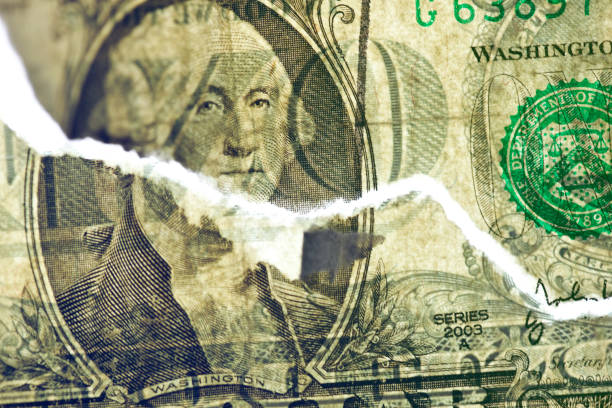
In the foreign exchange markets, crises do not merely disrupt price action—they fundamentally realign the gravitational forces that drive currency valuation. When geopolitical tensions escalate, financial contagion spreads, or systemic risk surges, the traditional factors influencing exchange rates undergo a dramatic shift. For the discerning trader on ForexTrades.net, understanding how currencies bifurcate into safe-haven and risk-on categories during these periods is not optional. It is survival capital.
The core premise is simple yet often misunderstood. During global crises, capital flows are governed not by yield differentials or economic growth forecasts, but by the primal instinct of capital preservation. Investors do not ask which currency offers the highest return. They ask which currency will hold its value when everything else burns. This behavioral pivot realigns the hierarchy of exchange rate determinants in a way that can override years of fundamental data within hours.
The first and most critical factor influencing exchange rates during a crisis is the liquidity premium. A safe-haven currency, by definition, must be deeply liquid and freely convertible. The U.S. dollar, the Swiss franc, and to a lesser extent the Japanese yen, possess this characteristic because their underlying bond markets are enormous and their central banks are credible backstops. When panic strikes, investors do not flee to cash in general—they flee to the most liquid cash. This is why the dollar often strengthens even when the crisis originates in the United States. The dollar’s liquidity is a self-reinforcing feedback loop. As demand for dollars rises, the exchange rate appreciates, which in turn attracts more capital seeking the safety of an appreciating asset. Traders who fail to recognize this liquidity dynamic often misread dollar strength as a vote of confidence in the U.S. economy when it is merely a technical scramble for the most tradable instrument.
A second, more complex factor is the current account and external debt structure. Not all developed market currencies behave identically during crises. The Japanese yen, for example, has historically appreciated during risk-off episodes because Japan is a net creditor nation with a massive current account surplus. When global risk appetite collapses, Japanese investors repatriate their foreign holdings, creating demand for yen. This is a textbook example of a structural safe haven. Conversely, currencies of countries that rely on foreign capital inflows to finance current account deficits—such as many emerging market currencies—suffer disproportionately. The Australian dollar, the New Zealand dollar, and the Canadian dollar are often classified as risk-on not because their economies are weak, but because they are commodity-dependent and frequently run deficits that require foreign capital. When that capital flees, these currencies depreciate sharply. Understanding this balance sheet perspective allows the trader to separate emotional perception from structural reality.
The third factor, and one that separates intermediate traders from advanced practitioners, is the interest rate channel and central bank credibility. Under normal conditions, higher interest rates attract capital and strengthen a currency. During a crisis, this relationship inverts. A central bank that raises rates to defend a currency during a panic can paradoxically accelerate the selloff if the market perceives that such tightening will crush economic growth. The safe-haven currencies—the dollar, franc, and yen—belong to central banks that are viewed as independent and willing to intervene aggressively, including through swap lines and unlimited liquidity provision. The Swiss National Bank’s willingness to cap the franc during the eurozone crisis is a prime example. The market knows that these central banks can and will act to prevent disorderly moves. Risk-on currencies, particularly those tied to smaller open economies, do not have this backstop. Their central banks are often constrained by political pressure or limited foreign reserves, making them vulnerable to speculative attacks.
Finally, the correlation with global risk indices provides a real-time feedback mechanism. The VIX, credit spreads, and sovereign CDS markets move in near perfect negative correlation with risk-on currency pairs like AUD/USD or NZD/USD. A sudden spike in the VIX is not merely a signal to reduce equity exposure. It is a direct driver of exchange rate dynamics because it triggers algorithmic and discretionary capital flows that operate on milliseconds. The advanced trader does not wait for the news headline. They watch the cross-asset correlations. When the VIX breaches a volatility threshold, they already know that the Australian dollar will weaken and the yen will strengthen, regardless of any domestic data release in those countries. This is not speculation. It is the mechanical result of portfolio rebalancing by institutional investors who are forced to deleverage risk when volatility rises.
For the moderately active investor on ForexTrades.net, the practical takeaway is clear. Do not trade risk-on currencies without a real-time understanding of crisis indicators. Do not assume that a currency’s strength during calm periods will persist during turbulence. The factors influencing exchange rates are not static—they are state-dependent. During a global crisis, liquidity trumps yield, current account surpluses trump growth rates, and central bank credibility trumps interest rate differentials. Master this hierarchy, and you will not only survive the next crisis. You will profit from it.