
Market order for immediate execution
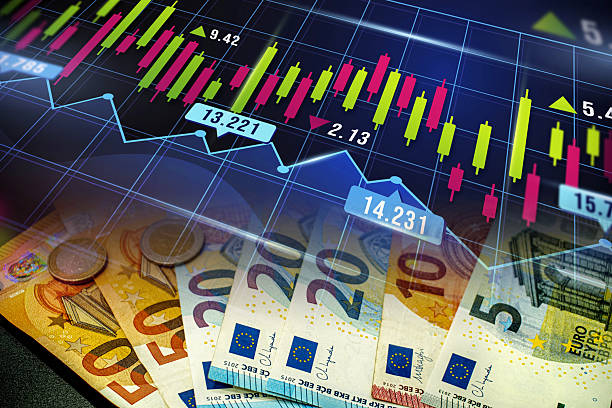
In the foreign exchange market, speed and precision are not luxuries; they are the bedrock of profitability. Among the order types available to traders—market, limit, and stop orders—the market order stands out as the most direct instrument for immediate execution. Understanding how market orders function within the broader framework of forex trading is essential for anyone who seeks to navigate this decentralized, high-liquidity environment with confidence. This article explains the mechanics of market orders, their role in the forex ecosystem, and the practical considerations every trader must master to use them effectively.
Forex trading, at its simplest, is the simultaneous buying of one currency and selling of another. Prices are quoted in pairs, such as EUR/USD or GBP/JPY, with the first currency being the base and the second the quote. The market order is the tool that transforms analysis into action. When you place a market order, you instruct your broker to execute the trade immediately at the best available current price. There is no delay, no conditional trigger, and no price limit. Your trade is filled almost instantly, provided there is liquidity in the market. This immediacy is what distinguishes market orders from limit or stop orders, which wait for specific price levels to be reached before execution.
The mechanism underlying a market order relies on the concept of liquidity and the bid-ask spread. In any forex pair, there is a bid price (the price at which you can sell) and an ask price (the price at which you can buy). The difference between them is the spread, which represents the cost of trading. When you submit a market order to buy, your broker fills it at the ask price. When you sell, it fills at the bid price. The trade is matched against existing orders in the market, often facilitated by a network of banks, brokers, and liquidity providers. For major pairs like EUR/USD, this process occurs in milliseconds because of deep liquidity. For exotic pairs, execution may be slightly slower or subject to wider spreads, but the principle remains unchanged: your order is filled immediately at the next available price.
One critical nuance that separates advanced traders from novices is understanding that “at the best available price” does not mean a guaranteed price. In fast-moving markets, slippage can occur. If the market is moving rapidly due to an economic news release or a sudden shift in sentiment, the price at which your order is filled may differ from the price you saw when you clicked the button. Slippage can work for or against you. For example, if you are buying EUR/USD and a positive eurozone GDP report hits, the price may jump upward before your order is processed. You may end up buying at a slightly higher price than anticipated. Conversely, if momentum works in your favor, you might get a better price. Recognizing this risk is essential for risk management. Smart traders do not use market orders during high-volatility events unless they have accounted for potential slippage in their position sizing.
The strategic use of market orders aligns with certain trading philosophies. Scalpers, who hold positions for seconds or minutes, rely almost exclusively on market orders because they need immediate entry and exit to capture tiny price movements. Day traders also employ market orders when they see a breakout or a clear directional move and want to enter without delay. For swing traders, market orders are less common because they often have time to use limit orders to achieve better entry prices. However, the key advantage of a market order is certainty of execution. In a liquid market, your trade will get filled. That is not always true for limit orders, which may never execute if the price does not reach your specified level. If the market gaps or moves sharply away, a limit order can leave you on the sidelines entirely.
Another advanced consideration is the relationship between market orders and order book depth. Institutional traders and experienced retail traders watch the order book to gauge where liquidity sits. If you place a large market order, you may consume multiple layers of the order book, causing price impact. This is called market impact or footprint. For most retail traders with standard lot sizes on brokers that offer fractional pip spreads, this effect is negligible. But in larger accounts or when trading less liquid pairs, a market order can push the price against you, eating into potential profits. Therefore, understanding your position size relative to market depth is a hallmark of sophisticated execution.
Market orders are also the default choice for stop-loss orders that become market orders when triggered. While a stop order is technically a contingent order, once the stop level is hit, it converts into a market order. This conversion is why stop-losses do not guarantee a specific price; they guarantee execution, but the fill may be worse than the stop level if the market is moving quickly. This is a common point of confusion. Traders who set a stop-loss at a precise price assume they will exit at that exact level. In reality, if the market gaps below that level, the stop-loss becomes a market order and fills at the next available price, which could be significantly lower. This is why combining stop orders with limit orders, or using guaranteed stop-loss orders when available, is a consideration for risk-aware traders.
In conclusion, the market order for immediate execution is the most fundamental tool in forex trading. It provides speed and certainty, allowing traders to capitalize on opportunities the moment they arise. However, with that speed comes the responsibility to understand liquidity, slippage, and market impact. For a casual or moderately active investor, mastering market orders means recognizing when immediacy is worth the potential cost of a wider fill versus when patience with a limit order can save pips. On ForexTrades.net, where the goal is to help traders operate safely and profitably, the market order is not just a button; it is a decision point. Use it when you need to act now, but always with a clear understanding of the price you are willing to accept and the volatility you are willing to endure. In the fast-moving world of currency trading, execution is everything, and market orders are how you take control of the moment.