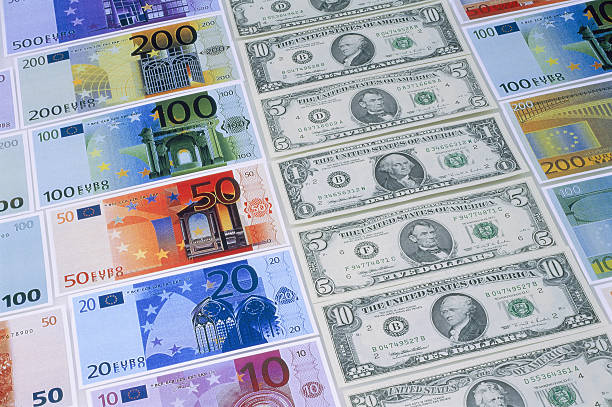

Prices reflect supply and demand globally

In the foreign exchange market, price is not an arbitrary number generated by algorithms or central bank decrees. It is the living, breathing product of countless transactions conducted across a decentralized global network. For traders on ForexTrades.net, understanding how market structure dictates price discovery is not optional background knowledge—it is the difference between reacting to noise and reading the signal. The core principle is deceptively simple: prices reflect supply and demand globally. But the mechanism through which this reflection occurs is governed by a market structure that is unlike any other financial arena.
To grasp price discovery in Forex, you must first abandon the mental model of a single exchange with a visible order book. Unlike equities, which trade on centralized exchanges like the NYSE or NASDAQ, the foreign exchange market is a decentralized, over-the-counter (OTC) ecosystem. There is no single location where all buy and sell orders converge. Instead, price is discovered through a tiered hierarchy of participants: central banks, commercial banks, hedge funds, corporations, and retail traders. This tiered structure creates a dynamic where supply and demand are aggregated across multiple liquidity pools, and the resulting price is a compromise between competing interests.
At the top of this hierarchy sits the interbank market, where the largest banks trade directly with one another using electronic brokering systems like EBS and Reuters Dealing. This is where true price discovery begins. Here, volume is immense, and spreads are razor-thin. The banks quote bid and ask prices based on their own inventories, hedging needs, and assessments of global supply-demand imbalances. If a European bank receives a flood of orders to sell euros against the dollar, it will adjust its quotes downward, signaling a surplus of euro supply. That adjustment ripples outward. Other banks, observing the shift, revise their own quotes. This is the raw, unfiltered price discovery driven by institutional supply and demand.
Below the interbank layer, price is disseminated through prime brokers to hedge funds, corporate treasuries, and, eventually, retail brokers. But here lies a critical nuance: retail traders do not see the true interbank depth. Instead, their brokers aggregate liquidity from multiple liquidity providers and present a synthetic price stream. This means the price you see on your MetaTrader platform is a reflection, not a direct replication, of the global supply-demand equilibrium. Brokers may also use dealing desk models, where they internalize trades and only offset risk to the interbank market when necessary. This creates a layer of latency and potential distortion. Consequently, the market structure itself introduces a friction between the global supply-demand reality and the price visible to the retail trader.
The influence of central banks further complicates this picture. Central banks are not profit-maximizing participants; they intervene to manage monetary policy, control inflation, or stabilize their currency. When the Bank of Japan decides to sell yen to weaken its currency, it is artificially increasing supply. This action directly alters the global supply-demand balance, and price moves accordingly. But because central banks operate at the highest tier, their influence is felt before it reaches retail charts. Price discovery must account for opaque policy signals, jawboning, and sudden intervention—all elements of market structure that are invisible to a simple supply-demand analysis.
Another structural feature unique to Forex is the continuous, 24-hour nature of the market. Price discovery does not pause when New York closes; it shifts to Tokyo and then London. Each session brings different liquidity profiles and dominant participants. During the Asian session, the yen and Australian dollar pairs may see price discovery driven by regional corporate flows and central bank activity. When London opens, euro and sterling pairs take center stage, bringing European institutional supply and demand into the equation. The global price at any given moment is the cumulative result of these overlapping sessions and the shifting balance of regional supply and demand. A trader who ignores the market structure of session flows is trading with incomplete information.
Finally, consider the role of electronic trading and algorithmic liquidity. High-frequency trading firms now account for a significant portion of interbank volume. These algorithms react to supply-demand imbalances in milliseconds, tightening spreads and accelerating price discovery. But they also create transient imbalances—flash events where price overshoots before equilibrium is restored. The market structure has evolved to include these non-human participants, and price discovery now incorporates their behavior. A trader must understand that a sudden price spike may not reflect genuine macroeconomic supply and demand but rather a structural artifact of algorithmic herding.
In essence, the price you trade on is a filtered, aggregated, and time-shifted representation of a vast global negotiation. The market structure of Forex—decentralized, tiered, and continuous—determines how quickly and accurately supply and demand are translated into price. Your edge lies not in predicting random fluctuations but in understanding which structural layer is currently driving the market. When you read a price chart, you are reading the fingerprint of global supply and demand, distorted by the very structure that delivers it to your screen. Master that structure, and you master price discovery.