
- USD-JPY 157.894 (+0.1 )
- GBP-USD 1.3367 (+0.31 )
- AUD-USD 0.70322 (-0.3 )
- USD-CAD 1.39797 (-0.09 )
- USD-CHF 0.82612 (-0.19 )
- NZD-USD 0.56281 (+0.1 )
Use position size calculators for precision

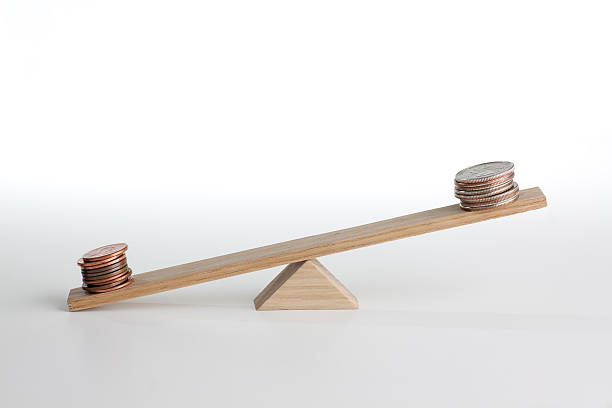
Leverage and margin are the twin engines of forex trading that allow modest capital to control outsized market positions. For the casual or moderately active trader on ForexTrades.net who wants to make money from currencies safely, understanding these tools is not optional—it is a survival requirement. Leverage amplifies both gains and losses, while margin is the collateral your broker demands to keep those leveraged positions open. Without precise position sizing, the relationship between these two forces becomes a trap. This is where the position size calculator enters as an indispensable instrument of precision.
At its core, leverage is expressed as a ratio, such as 50:1 or 100:1, meaning that for every dollar in your account, you can control fifty or one hundred dollars in the market. In the retail forex environment, brokers often offer leverage as high as 500:1. The seductive appeal is obvious: a small price movement on a large notional position can yield substantial returns. However, the reverse is equally true. A 50:1 leverage ratio means that a mere two percent adverse move in the underlying currency pair can wipe out your entire account equity if you are fully leveraged. Margin is the mechanism that enforces this discipline. The required margin is a fraction of the full trade size, calculated as the notional value of the position divided by the leverage. For a $100,000 position at 100:1 leverage, your broker holds $1,000 in margin. This margin is not a cost or a fee; it is a deposit that locks up your capital while the trade is active. If the market moves against you and your equity falls below a certain threshold—the maintenance margin or the margin call level—the broker will close your position automatically to protect their lending. The trader who ignores margin dynamics is playing Russian roulette with their account.
This is where the position size calculator eliminates guesswork. Many traders mistakenly believe that choosing a stop-loss distance in pips is sufficient risk management. It is not. The real variable is how much of your account you are willing to lose on a single trade, expressed as a percentage. A position size calculator takes three inputs: your account balance, the percentage risk you are willing to accept per trade, and the stop-loss distance in pips. It then outputs the exact lot size or number of units to trade. This output directly determines how much margin will be consumed by the trade, and therefore how much leverage you are actually using. Without this calculation, you might set a 30-pip stop-loss and inadvertently tie up 80 percent of your margin on a single trade, leaving no room for temporary drawdowns. With the calculator, you can ensure that your maximum risk never exceeds your predefined comfort zone, typically between one and two percent of account equity per trade.
Consider a concrete example. A trader with a $10,000 account wants to trade EUR/USD with a 50-pip stop-loss and a risk tolerance of one percent per trade. The position size calculator reveals that the appropriate trade size is roughly 0.20 standard lots or two mini lots. At 50:1 leverage, this position requires about $400 in margin, leaving ample equity in the account to withstand short-term fluctuations and preventing an inadvertent margin call. Now imagine the same trader skipping the calculator and opening a full standard lot of $100,000. The stop-loss of 50 pips would create a loss of $500, which is five percent of the account—a significant hit. Worse, the margin required at 50:1 would be $2,000, consuming twenty percent of the trading capital. One adverse swing could trigger a cascade: the margin call level is reached sooner, and the broker closes the position at a loss, locking in unnecessary damage. The calculator prevents this chain of events by letting you set your risk tolerance first and then deriving the position size that respects it.
The precision of a position size calculator also protects against the psychological trap of revenge trading. When a trader loses money and wants to recover quickly, the natural impulse is to increase position size to capture larger gains. This impulse, unconstrained by calculation, inevitably leads to overleveraging. A calculator forces the trader to maintain consistency. After a losing trade, the reduced account balance automatically yields a smaller recommended position size for subsequent trades. This built-in feedback loop aligns leverage with actual capital and prevents the emotional expansion of risk. For the moderately active investor who trades part-time, this automated discipline is crucial because it removes the need for real-time mathematical gymnastics while executing a trade.
Finally, understanding the interplay between margin and position size allows the advanced trader to manage total account exposure. Most brokers provide a margin usage percentage in their trading platforms. By using a position size calculator to determine each trade before entry, the trader can aggregate the theoretical margin requirements across all open positions. If the total margin usage approaches fifty percent of account equity, the trader knows they are skating on thin ice. A few simultaneous adverse moves could trigger a margin call across multiple positions. The disciplined trader keeps total margin usage below twenty or thirty percent, using the calculator to ensure that no single trade, no matter how promising, breaches this boundary. This is the hallmark of a professional approach to leverage: not avoiding it, but controlling it with precision. The broker gives you leverage as a tool, not a gift. Use it wisely, and the calculator is your instruction manual. Use it blindly, and the market will return your account to zero.




Currency Quotes
EUR-USD


Current
1.11692Change
+0.15
USD-JPY

Current
157.894Change
+0.1
GBP-USD

Current
1.3367Change
+0.31
AUD-USD

Current
0.70322Change
-0.3
USD-CAD

Current
1.39797Change
-0.09
USD-CHF

Current
0.82612Change
-0.19
NZD-USD

Current
0.56281Change
+0.1