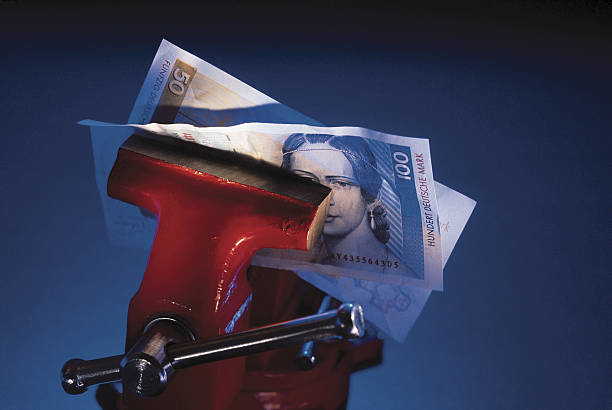

Use stop-losses to prevent extreme drawdowns
Leverage is the double-edged sword of forex trading. It amplifies gains when the market moves in your favor, but it accelerates losses just as quickly when it does not. For the casual and moderately active investor using margin, the line between a manageable drawdown and a catastrophic account blow-up is often drawn by a single tool: the stop-loss order. Without it, margin calls and stop-outs become a matter of when, not if. Understanding how to deploy stop-losses effectively is not optional for anyone trading on margin; it is the fundamental discipline that separates those who survive long-term from those who are erased by a single adverse move.
When you trade with leverage, your broker extends you a loan based on the margin you deposit. A typical 50:1 leverage means a 2% move against your position wipes out half your margin, or your entire account if you are fully leveraged. This is not theoretical. A sudden economic release, a central bank surprise, or a flash crash can drive prices through technical levels in seconds. Without a stop-loss, you are betting that you can outthink the market in real time. That bet rarely ends well. The investor who believes they can monitor every tick and exit manually is ignoring the reality that slippage, emotion, and latency conspire against them. A stop-loss is not a sign of weakness; it is a precommitment to a maximum acceptable loss, imposed before fear or greed can override judgment.
The relationship between stop-loss distance and position size is the critical calculation. Many traders set a stop at an arbitrary price, only to find that the distance is too wide relative to their account size or too tight relative to market volatility. For an account with $10,000 and 50:1 leverage, using a 20-pip stop with a micro lot is low risk, but using a 200-pip stop with a full standard lot is a disaster waiting to happen. The correct approach is to decide your maximum acceptable loss per trade—never more than 1% to 2% of account equity—and then derive the position size from the stop distance. This is not a matter of preference. It is a mathematical constraint. If your stop must be wider to avoid being stopped out by noise, you must trade smaller lots. If your stop is tight to protect capital, you can size up proportionately. The stop-loss defines the risk; the position size executes it.
Margin calls occur when your account equity falls below the maintenance margin requirement. At that point, the broker demands additional funds or partial liquidation. Stop-outs happen automatically when the margin level hits a critical threshold, usually around 100% or lower, at which point the broker closes your trades from largest to smallest until the margin requirement is satisfied. The difference between these two events is the difference between a warning and a forced exit. But both are symptoms of the same error: allowing drawdowns to run unchecked. A stop-loss prevents you from ever reaching that stage if it is set correctly. Even if the market gaps beyond your stop, the distance traveled is far smaller than if you had no stop at all. Gapping is a risk on major news events, but it rarely exceeds the entire margin unless you have oversized your position grotesquely.
The most advanced use of stop-losses on margin involves dynamic placement based on volatility. Instead of a fixed pip value, consider the Average True Range of the currency pair you trade. Set your stop at a multiple of ATR below your entry, typically 1.5 to 2.5 ATR. This adjusts automatically to market conditions. In quiet periods, the stop is tighter, preserving capital. During volatile news cycles, the stop is wider, preventing noise-driven exits that leave you watching the market reverse without you. This technique requires no guesswork and handles the inherent unpredictability of forex. For an investor trading with moderate leverage, this is the single most effective way to avoid margin calls while still allowing trades room to breathe.
The psychological benefit is equally important. Without a stop-loss, every minor pullback becomes a crisis of confidence. You freeze. You delay. You hope. And hope is not a strategy. With a stop-loss in place, you know the worst-case outcome before the trade even starts. That peace of mind allows you to focus on the trade’s validity rather than the account’s survival. It also prevents the common error of moving a stop further away after the trade goes against you, which is the first step toward a margin call.
Extreme drawdowns do not happen because the market is unfair. They happen because traders ignore the mathematics of leverage. A 10% loss requires an 11% gain to recover. A 50% loss requires a 100% gain. Once you breach that threshold, recovery is unlikely without extraordinary luck. The stop-loss is your insurance against that arithmetic. It does not guarantee profit, but it guarantees that you remain in the game to trade another day. On a website like ForexTrades.net, where the goal is to make money safely from foreign exchange markets, this principle cannot be overstated. Every trade on margin should have a stop-loss before the entry is executed. If you cannot place a stop-loss, you cannot afford the trade.