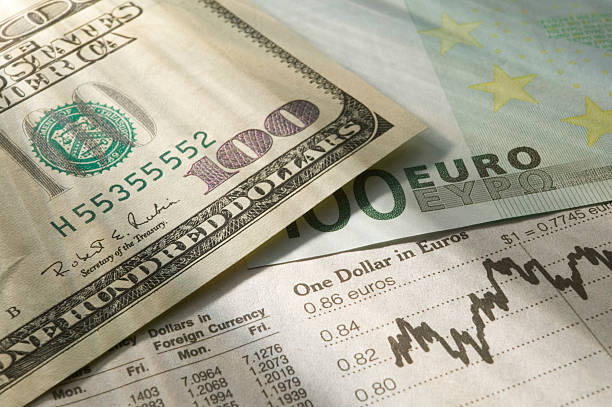

You don't need to be an economist to trade
One of the most persistent myths in the foreign exchange market is the belief that successful trading requires a doctorate in economics, a deep understanding of central bank policy mechanics, or the ability to parse quarterly GDP reports like a professional analyst. This misconception keeps countless potential traders on the sidelines, intimidated by the sheer volume of data and jargon that surrounds the currency markets. The truth is far simpler: you do not need to be an economist to trade forex profitably. What you need is a clear understanding of price action, risk management, and the psychological discipline to execute a plan—none of which require a degree in monetary theory.
The foreign exchange market is the largest and most liquid financial market in the world, with trillions of dollars changing hands daily. It is driven by supply and demand, just like any other market. While economic indicators like interest rate decisions, employment reports, and inflation data certainly move prices, you do not need to forecast these events to trade them. You only need to react to what the market is actually doing, not what you think it should do based on a textbook model. This is where technical analysis, price action trading, and trend following become far more practical than macroeconomic forecasting for the average trader.
Many novice traders fall into the trap of trying to understand every variable that might affect a currency pair. They read endless reports on trade deficits, yield curves, and political instability, believing that more information will lead to better trades. In reality, this approach often leads to analysis paralysis. The most consistent traders I have observed over the years are those who focus on a few reliable setups, manage their risk tightly, and ignore the noise. They know that the market has already priced in the vast majority of available information. The news you read after a price move is just a narrative the media creates to explain a movement that has already happened. You do not need to be ahead of the news; you need to be ahead of the crowd’s reaction to it, and that reaction shows up in the charts.
A common counterargument from those who insist on economic expertise is that without understanding fundamental drivers, a trader is simply gambling. This is a misunderstanding of how trading actually works. Gambling is placing a bet on an uncertain outcome with no edge. Trading, even without economic insight, involves systematic risk management, probability assessment, and consistent execution. A trader who follows a trend from a clear breakout level with a predefined stop loss and take profit target is not gambling. They are executing a strategy based on statistical probabilities derived from market behavior. The economist might explain why the trend exists; the trader only needs to know that it exists and how to ride it.
Another reason the “economist myth” persists is the complexity of forex terminology. Terms like “carry trade,” “forward points,” or “purchasing power parity” can sound intimidating. But you do not need to know these concepts to place a trade. You need to know what a pip is, how to calculate position size, and how to use a stop loss. That is the core toolkit. The rest is intellectual curiosity, not practical necessity. In fact, many professional traders come from backgrounds in engineering, mathematics, or even art, not economics. They succeed because they bring discipline, pattern recognition, and a systematic approach—skills that have nothing to do with macroeconomics.
There is a subtle nuance here that experienced traders understand but beginners often miss: you can trade without being an economist, but you cannot trade without understanding risk. The single biggest differentiator between profitable and unprofitable traders is not their economic knowledge but their ability to preserve capital. You can have a winning strategy on paper, but if you risk too much on a single trade or fail to cut losses quickly, no amount of fundamental analysis will save you. This is why the website focuses on safety and knowledge. You do not need to predict the euro’s next move against the dollar based on European Central Bank policy. You need to know that if you are wrong, you lose only 1% of your account, not 10%.
Finally, let us address the elephant in the room: the best traders often ignore the news entirely during their trading sessions. They watch the charts, not the headlines. If a major economic release causes volatility, they either wait for the market to settle or trade the resulting range with tight stops. They do not try to anticipate which way the data will break. This is not laziness; it is a recognition that news-driven moves are often the most unpredictable and dangerous for retail traders. The institutional players have faster access, better execution, and deeper pockets. Your edge is not in beating them to the trade; it is in staying out of their way and picking up scraps after the dust settles.
The path to consistent forex trading does not require you to read economic textbooks or memorize the names of every central bank governor. It requires you to learn a simple, repeatable process, test it on a demo account, and then execute it with discipline. The market rewards simplicity and consistency, not complexity and ego. So if you have been waiting to start because you think you need more economic education, stop waiting. Open a demo account, learn one or two price patterns, and start trading today. You will learn more in one month of practical trading than in a year of studying economic theory. And when you finally hear someone claim you need to be an economist to trade, you will know they have never actually made a consistent profit in the market themselves.