

How liquidity affects spread width
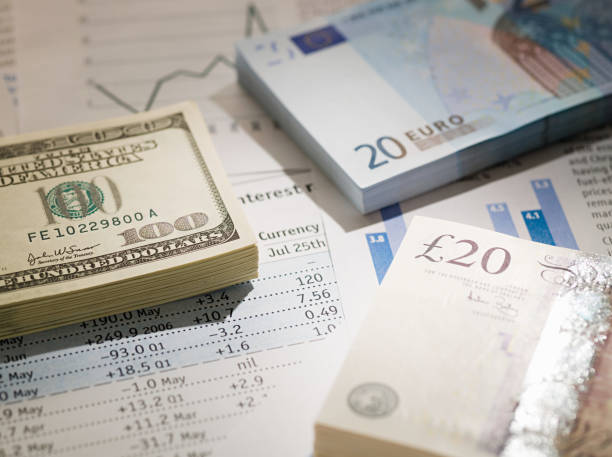
In the foreign exchange market, the bid-ask spread is not a fixed cost. It is a dynamic variable that shifts constantly, driven primarily by one underlying force: liquidity. To understand how transaction costs impact your bottom line as a currency trader, you must first grasp the direct relationship between liquidity and spread width. Liquidity, simply put, is the degree to which an asset can be quickly bought or sold in the market without causing a significant movement in its price. When liquidity is high, the spread narrows. When liquidity dries up, the spread widens. This is not a subtle nuance; it is a mechanical reality of how the forex market operates, and ignoring it will erode your trading capital faster than any losing trade.
The mechanics of this relationship stem from the role of market makers and liquidity providers. In a highly liquid market, such as the EUR/USD pair during the London-New York overlap, there is a dense crowd of participants. Banks, hedge funds, institutional investors, and retail traders are all actively bidding and offering. Because there are so many buyers and sellers, the competition among them is fierce. A market maker knows that if they quote a spread that is too wide, a trader will simply take a fill from another provider. This competitive pressure forces the spread down to extremely tight levels, often as low as 0.1 to 0.2 pips for major currency pairs. In this environment, the cost of entering and exiting a trade is negligible, allowing scalpers and day traders to operate profitably with high frequency.
Conversely, when liquidity evaporates, the spread widens dramatically. This happens in predictable scenarios: during holidays, after major economic news releases, in the Asian trading session when London and New York are closed, and with exotic currency pairs that see minimal volume. Imagine trading the USD/TRY (U.S. Dollar versus Turkish Lira) during a quiet period. There may be only a handful of banks willing to provide quotes. With fewer participants, each provider has less incentive to offer a competitive price. More importantly, the risk for the liquidity provider increases because they cannot instantly hedge or offload a large position. To compensate for this risk, they widen the spread. A spread that is normally two pips on a major pair can balloon to ten, twenty, or even fifty pips on an exotic pair or during a low-liquidity event. This is not a malfunction; it is a pricing mechanism designed to protect the provider from adverse selection.
The practical implication for you as a trader is profound. Spread width directly defines your break-even point. Consider a trade on a volatile cross pair like GBP/AUD. If the spread is typically 3 pips during peak hours but widens to 10 pips during the Sydney open, you start every trade with a 10-pip deficit. For a short-term trade targeting 20 pips, that 10-pip spread represents a 50% reduction in your potential profit before the market even moves. This is why experienced traders schedule their activity around the most liquid periods. The London session is the liquidity hub for the European pairs, while the New York session dominates for the USD pairs. Trading the Tokyo open might be necessary for yen pairs, but the spreads will be notably wider than during the London crossover.
News events create a unique liquidity landscape. Before a major economic release like the Non-Farm Payrolls report, liquidity can paradoxically dry up as institutions pull their quotes to avoid being caught on the wrong side of a volatile move. Spreads can widen by several hundred percent in the minutes leading up to the announcement. When the news hits, liquidity can vanish entirely for a few seconds or minutes, leading to massive slippage and spreads that are effectively meaningless. Professional traders either stay out of the market during these events or place limit orders at specific prices rather than market orders, precisely because they understand that liquidity-driven spread expansion makes market order execution dangerous.
You cannot manage what you do not measure. Advanced traders track spread conditions as part of their trade journal. They note the time of day, the currency pair, and the observed spread at entry. Over time, patterns emerge. You may discover that a particular pair consistently has a 2-pip spread between 8:00 AM and 10:00 AM EST, but a 5-pip spread between 3:00 AM and 5:00 AM. This knowledge allows you to optimize your trade timing and choose your instruments wisely. It also influences your choice of broker. A broker that quotes low spreads during high liquidity but widens them aggressively during low liquidity may be charging you more in transaction costs overall than a broker with slightly higher average spreads but tighter control during off-hours.
Ultimately, spread width is the price you pay for liquidity. When the market is deep and active, you pay a low price. When the market is thin and uncertain, you pay a high price. Your job is not to complain about the spread but to align your trading activity with the most liquid conditions for your chosen pairs. This is advanced knowledge because it moves beyond memorizing pips and into understanding the underlying market structure that determines them. Trade the liquidity windows, respect the spread expansion during low volume, and you will have a structural advantage over traders who ignore this fundamental relationship.