
Liquidity means easier entry and exit
On ForexTrades.net, we cut through the noise to give you the real mechanics of the foreign exchange market. If you are a casual or moderately active investor looking to make money safely, you must understand one foundational concept: liquidity. In forex trading, liquidity is not a vague advantage—it is the difference between a smooth, predictable trade and a sudden, costly disaster. This article explains how liquidity and volume affect your ability to enter and exit positions, and why this is the backbone of how the forex market actually functions.
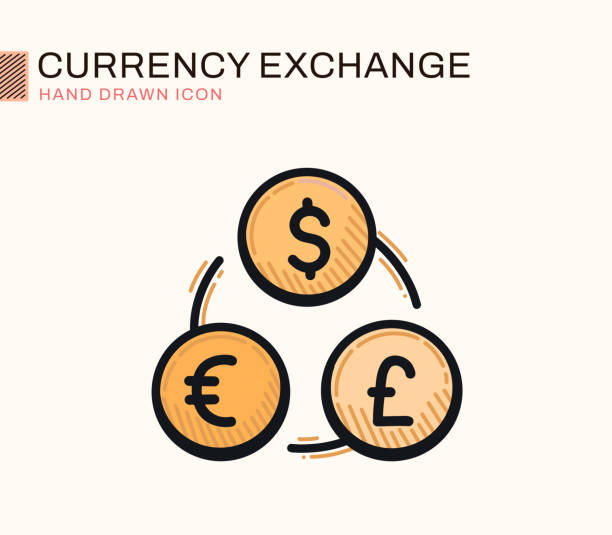
Forex, or foreign exchange, is the largest financial market in the world, with a daily trading volume exceeding six trillion dollars. At its core, forex trading is the simultaneous buying of one currency and selling of another. You are speculating on the price movement between two currencies, such as the Euro against the U.S. Dollar (EUR/USD). Unlike the stock market, which has centralized exchanges, forex is decentralized. You trade over-the-counter through a global network of banks, brokers, and institutional investors. This decentralization is precisely why liquidity matters so much. In a decentralized market, there is no single exchange guaranteeing that you will find a buyer or seller at your desired price. Liquidity is the measure of how easily you can execute a trade without causing a significant price change.
When we say liquidity means easier entry and exit, we are describing the direct relationship between trading volume and market efficiency. High liquidity means there are many buyers and sellers actively trading at any given moment. In practice, this allows you to enter a position at a tight spread—the difference between the bid price and the ask price. For the most liquid currency pairs, like EUR/USD, USD/JPY, and GBP/USD, spreads are often just one or two pips. When liquidity is low, spreads widen dramatically. You may find yourself paying five, ten, or even twenty pips to get into a trade. This instantly erodes your potential profit and increases your risk. For the moderately active investor who trades frequently, even a small spread increase compounds into significant losses over time. Low liquidity also means your order may not fill at all, or it may fill at a price far from your expectation, a scenario known as slippage.
Volume is the driver of liquidity. In forex, volume does not refer to the number of shares traded, but to the total amount of currency changing hands. The highest volume occurs during the overlap of major market sessions. The London and New York session overlap, for example, from 1 PM to 5 PM GMT, sees the highest trading activity. During this time, liquidity is abundant. You can execute large trades with minimal price impact. Conversely, during the Asian session or late on a Friday, volume drops. Less active trading means fewer participants, wider spreads, and higher volatility. This is not the same as risk. Low-liquidity volatility is dangerous because price movements are unpredictable and can be triggered by a single large order. You might enter a trade thinking you have a clear technical setup, only to see price jump against you because a big player stepped in. Understanding volume patterns is how you avoid being the liquidity for someone else’s exit.
For the serious forex trader, liquidity is not just about convenience; it is about control. When you have high liquidity, you have the ability to manage risk precisely. You can set stop-loss orders and take-profit orders with confidence that they will execute near your intended price. In illiquid markets, your stop-loss may not get filled until price has moved significantly past your level, turning a controlled loss into a large one. The same applies to taking profits. You might see a target reached on your chart, but if liquidity is too thin, your order may miss the move entirely. This is why professional traders avoid trading during news events when liquidity can vanish in an instant. The initial burst of volume after a major economic release often comes from algorithms and large banks. The retail trader entering a moment too late finds themselves in a market with no depth, where spreads spike and orders go unfilled.
Liquidity also determines the cost of leverage. Forex trading is typically done on margin, meaning you control a large position with a small deposit. In a liquid market, this leverage works in your favor because you can enter and exit without penalty. In illiquid conditions, leverage magnifies slippage. A 50-to-1 margin account means a one-pip slip is worth five times more in actual loss. If you are trading a pair with a low average daily range and suddenly encounter slippage, you can lose a week’s worth of gains in minutes. This is a hidden cost that many casual traders overlook. The most effective strategy is to trade only during high-volume sessions, focus on major pairs, and avoid exotics or crosses that have naturally lower liquidity. The major pairs are traded 24 hours a day, but not with equal depth. Knowing the volume clock is a skill that separates consistent winners from gamblers.
In summary, the mechanics of forex trading are not complex. You buy low, sell high. But the execution of that simple plan depends entirely on liquidity and volume. High liquidity gives you easy entry and exit, tight spreads, reliable fills, and control over your risk. Low liquidity does the opposite. As a trader on ForexTrades.net, your goal is to make money safely. That safety comes from understanding when and how to trade. Do not fight the liquidity cycle. Trade when the volume is high, stick to the liquid pairs, and respect that slippage and spread are your real costs of doing business. The moment you treat liquidity as an afterthought is the moment you start donating your capital to the market’s deeper pockets. Master this principle, and you will trade with the confidence of an insider.