
- USD-JPY 157.894 (+0.1 )
- GBP-USD 1.3367 (+0.31 )
- AUD-USD 0.70322 (-0.3 )
- USD-CAD 1.39797 (-0.09 )
- USD-CHF 0.82612 (-0.19 )
- NZD-USD 0.56281 (+0.1 )
The Euro's journey since its inception

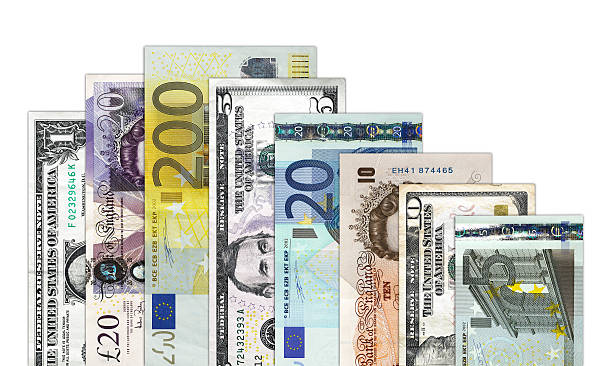
When the euro launched on January 1, 1999, it was more than just a new currency—it was an unprecedented experiment in monetary union. For traders in the foreign exchange markets, the euro represented a fundamental shift in how global currencies would be valued, traded, and hedged. Understanding the euro’s journey from its inception to its current role as the second-most-traded currency in the world provides essential context for anyone serious about forex trading. This is not merely historical trivia; it is a lens through which to view market psychology, central bank intervention, and the long-term structural forces that drive currency pairs.
The euro was initially introduced as an electronic currency for accounting and financial transactions, with physical notes and coins entering circulation three years later in 2002. At that moment, eleven European Union member states surrendered their national monetary sovereignty to the European Central Bank. For forex traders, this meant the disappearance of several major currency pairs—the German mark, the French franc, the Italian lira—and their replacement with a single pair: EUR/USD. The immediate effect was a reduction in cross-currency arbitrage opportunities, but a new liquidity concentration that made the euro-dollar pair the most traded in the world, a status it retains today.
One of the most instructive episodes for any forex trader occurred during the euro’s first decade. From its launch, the euro weakened dramatically, falling from $1.18 to a low of $0.82 in October 2000. This was not a sign of failure but a textbook case of market pricing in uncertainty. The ECB was an unproven institution, and traders discounted the euro against the dollar because the market questioned whether the monetary union could survive its first economic stress. That stress arrived in the form of the global financial crisis of 2008, followed by the sovereign debt crisis that began in 2009. The euro dropped from nearly $1.60 in 2008 to below $1.20 by 2010. The lesson here is that currency markets are forward-looking and brutal in their assessment of institutional credibility.
The sovereign debt crisis exposed a fundamental structural flaw that every forex trader must understand: a monetary union without a fiscal union creates tension. Countries like Greece, Portugal, and Spain could not devalue their own currencies to regain competitiveness because they had surrendered that tool. Instead, they faced internal devaluation through wage cuts and austerity, which depressed economic activity and made their sovereign bonds risky. The euro weakened, not because the eurozone as a whole was insolvent, but because the market anticipated that some member states might default or exit the union. This risk premium, priced into the euro, is a masterclass in how political and fiscal health directly determine currency value.
The ECB’s response to the crisis forever changed how central banks interact with forex markets. In 2012, ECB President Mario Draghi famously stated that the bank would do “whatever it takes” to preserve the euro. This single sentence, backed by the eventual creation of the Outright Monetary Transactions program, reversed the euro’s decline and set the stage for a multi-year rally. For traders, this was a clear demonstration that verbal intervention, when credible, can be as powerful as actual rate changes. The euro rose from $1.21 in July 2012 to above $1.39 by May 2014, illustrating that central bank communication is a tradable asset in itself.
More recently, the euro has faced headwinds from diverging monetary policy. While the Federal Reserve raised interest rates aggressively between 2015 and 2018 and again starting in 2022, the ECB maintained negative interest rates until July 2022. This negative rate policy made the euro a funding currency for carry trades, where investors borrowed euros cheaply to buy higher-yielding assets elsewhere. When the ECB finally began raising rates, the carry trade unwound, causing volatility. The EUR/USD pair fell to parity in mid-2022 for the first time in two decades, a psychological level that triggered significant institutional buying.
The euro’s journey also teaches traders about the relationship between energy prices and currency valuation. The eurozone is a net importer of energy, particularly natural gas. When Russia’s war in Ukraine began in 2022, energy prices soared, worsening the eurozone’s terms of trade. The euro weakened against the dollar as a result, demonstrating that commodity dependency is a structural factor in currency movement. Even today, EUR/USD remains sensitive to energy price fluctuations, a correlation that serious traders track with crude oil and natural gas futures.
For the active forex trader, the euro is not just a pair to trade; it is a laboratory for understanding market mechanics. Its history shows that currency values are driven by a mix of interest rate differentials, central bank credibility, fiscal discipline, political stability, and external trade balances. The euro has survived multiple existential crises, each time emerging stronger and more transparent in its pricing. This resilience is why EUR/USD remains the most liquid and tightest spread pair in the market, offering retail traders the best conditions for scalping, swing trading, or long-term positioning.
In summary, the euro’s evolution from a speculative experiment to a bedrock of global currency markets encapsulates every major theme in forex trading. It proves that no currency is too big to fail, that central bank intervention shapes price action, and that fundamental analysis must account for political and fiscal realities. For the casual or moderately active investor using ForexTrades.net, internalizing this history is not optional—it is the foundation upon which all profitable currency trading is built. When you trade the euro, you are trading two decades of institutional learning, market stress tests, and the collective wisdom of millions of participants. That is an edge worth understanding.

Currency Quotes
EUR-USD


Current
1.11692Change
+0.15
USD-JPY

Current
157.894Change
+0.1
GBP-USD

Current
1.3367Change
+0.31
AUD-USD

Current
0.70322Change
-0.3
USD-CAD

Current
1.39797Change
-0.09
USD-CHF

Current
0.82612Change
-0.19
NZD-USD

Current
0.56281Change
+0.1